
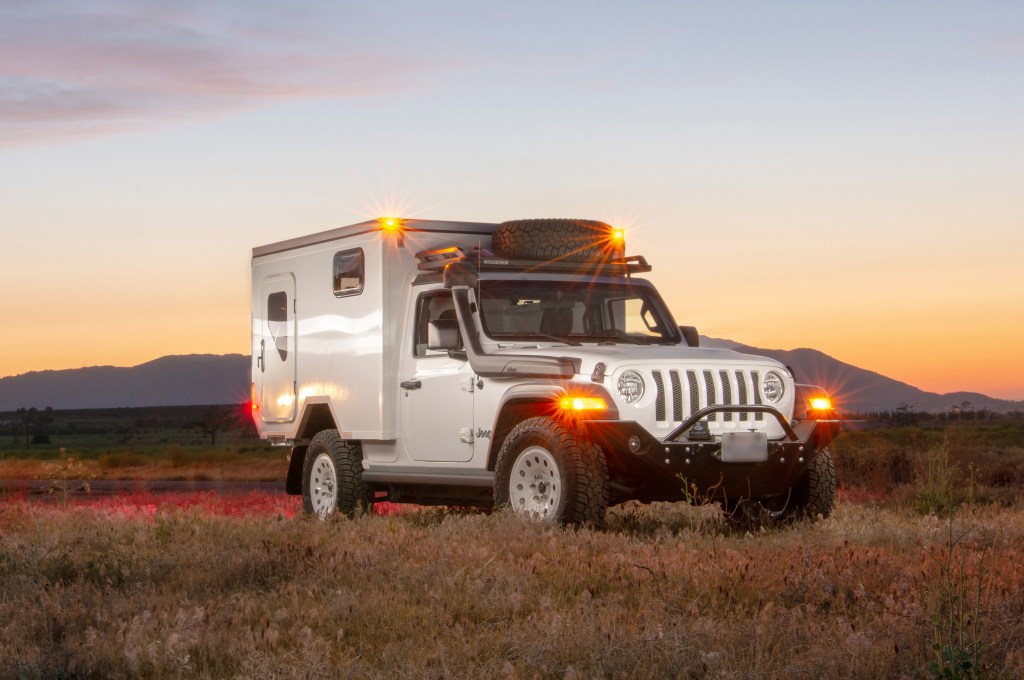
Project description by Michael Fuchs.
About the Refuge II Jeep Camper Project
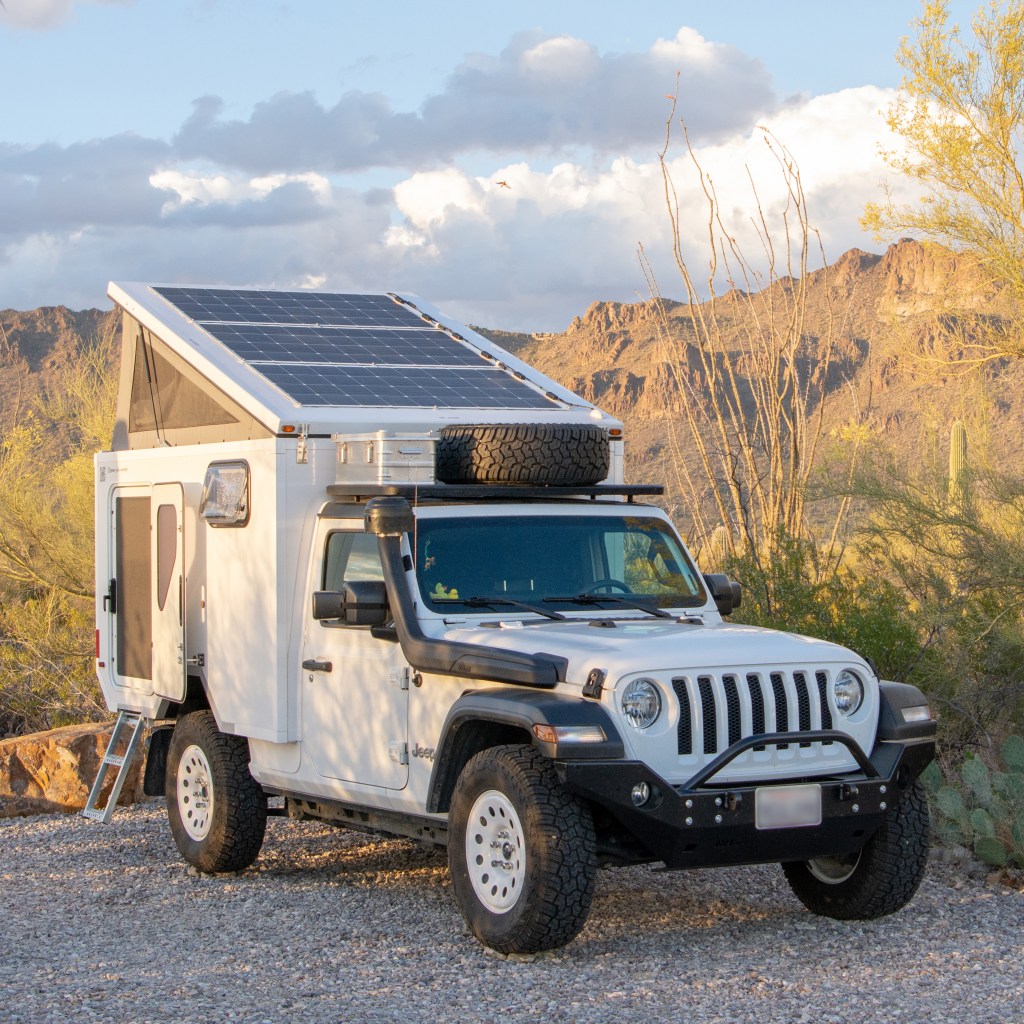
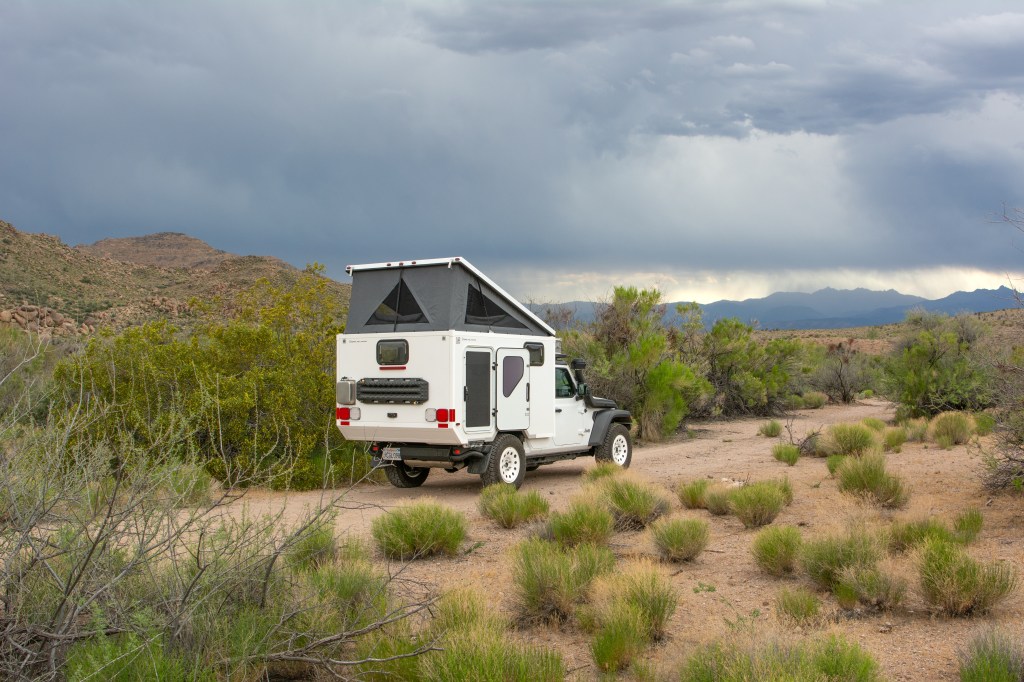
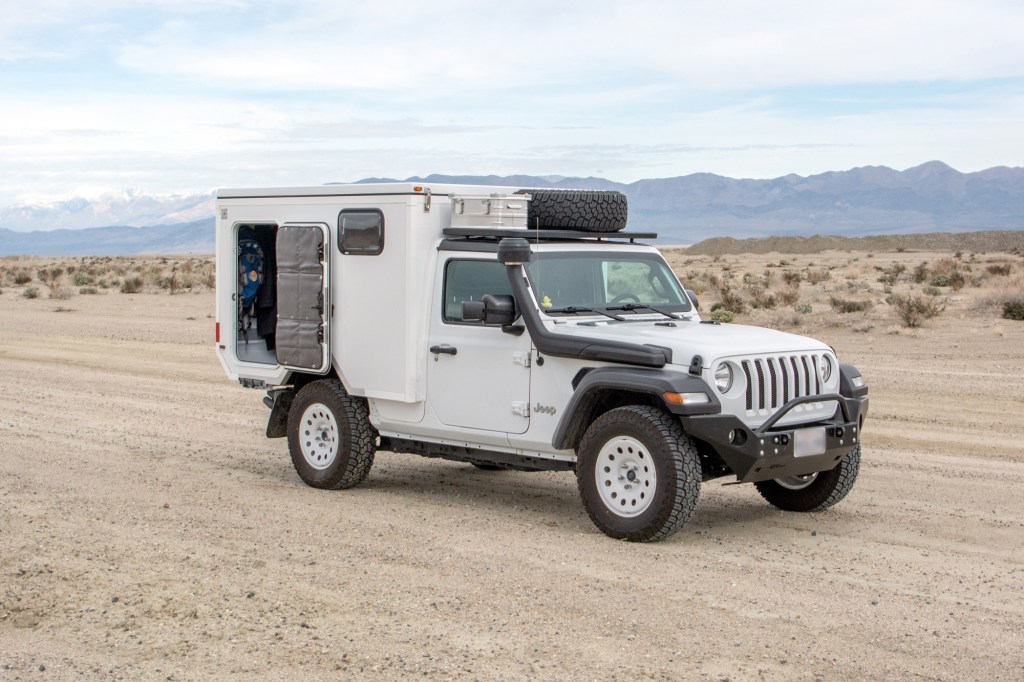
After a great 5-month trip in our Unimog ended in 2019, I started dreaming of a smaller, more nimble vehicle that would be sea container shippable but had most of the comforts of our big Unimog. I started designing this vehicle in 2019 and finished the build in the spring of 2023. We have had over 10,000 miles of adventures in the vehicle.
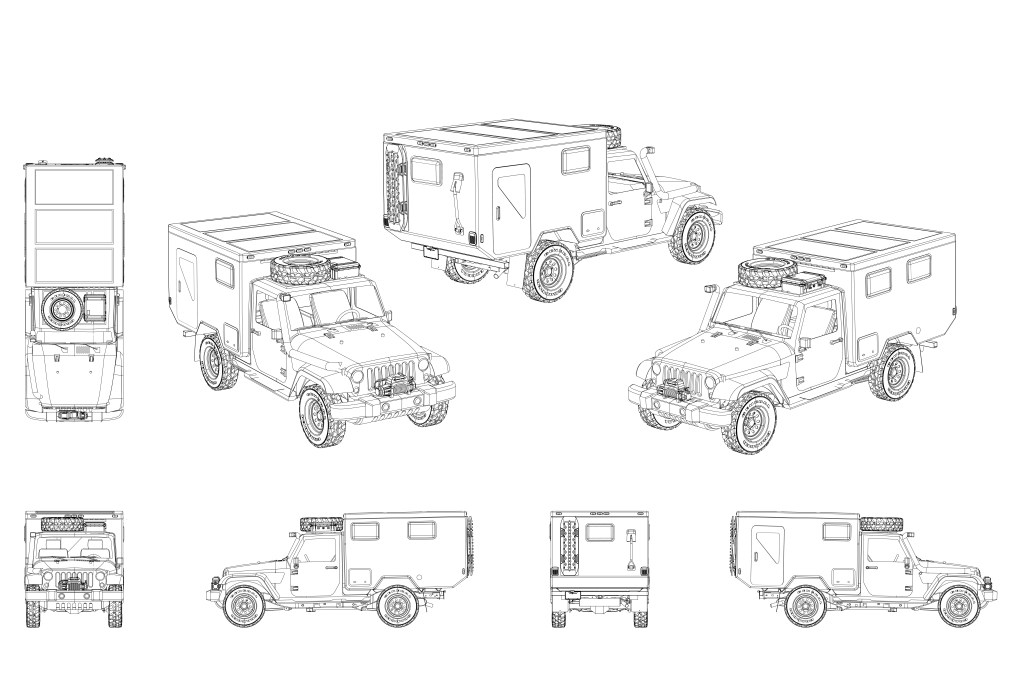
About the Design
I evaluated chassis from all the available North American options, and after much consideration, a current year 4-door Jeep Wrangler JL Unlimited was the only chassis that met all of our requirements. I did 40+ configuration studies and carefully tracked weight and center of gravity. I tested a wide variety of materials that I typically use in my aerospace day job and settled on foam cored composite carbon fiber panels for the majority of the construction with honeycomb cored fiberglass panels for a few locations.
Part way through my design phase, I was chatting with Dan Grec @theroadchoseme and he asked if I would consider making a second camper at the same time for him. I knew it would add a cool twist to the project, so I agreed. I combined our requirements, and finalized the design for what met both the needs for both Yvonne and I and Dan. I built 2 identical camper shells: one for Yvonne and I and one for Dan. Dan and I collaborated on the assembly of the two vehicles. I finished our interior for our needs and Dan finished out his interior for his needs, so the two vehicles are very similar but different in interior execution.
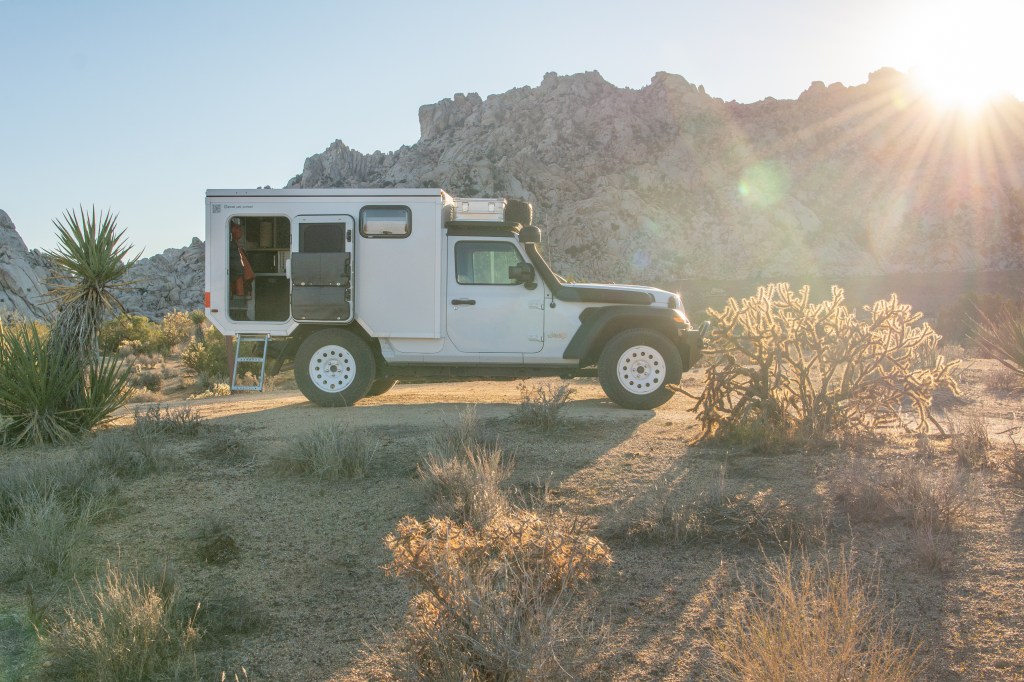
The following is a list of details on our Refuge II Jeep Camper:
Chassis and Drivetrain
- 2020 Jeep Wrangler JL Unlimited Sport
- Odometer: 49,500 miles
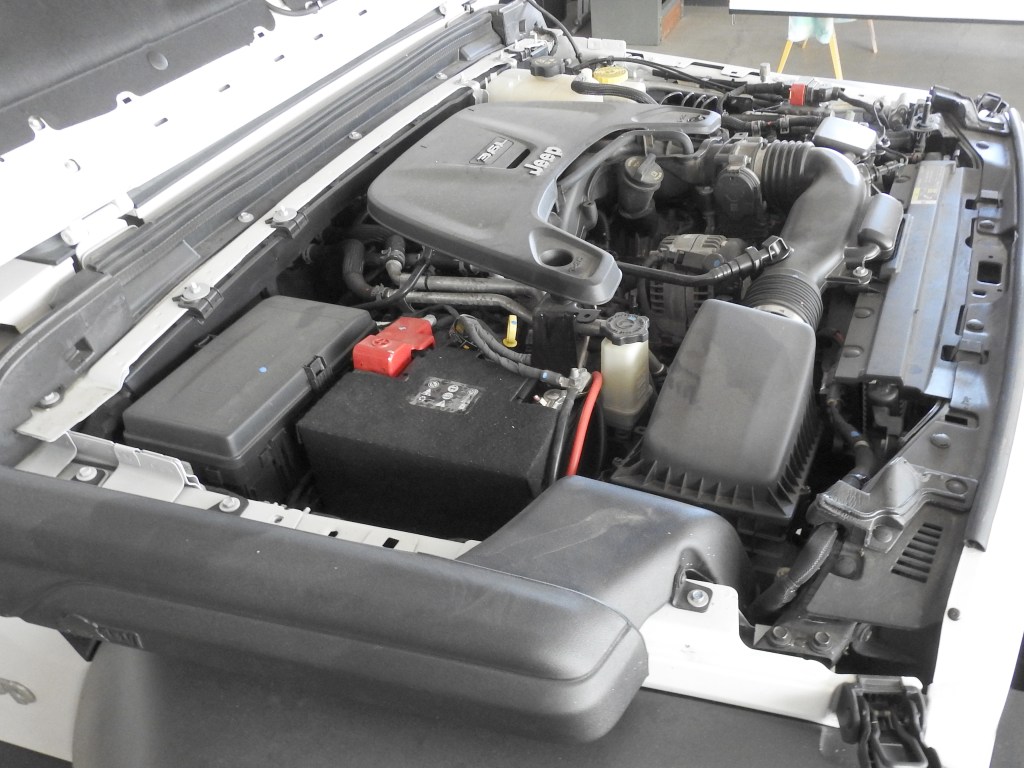
- Engine: 3.6L Pentastar V6 (gasoline)
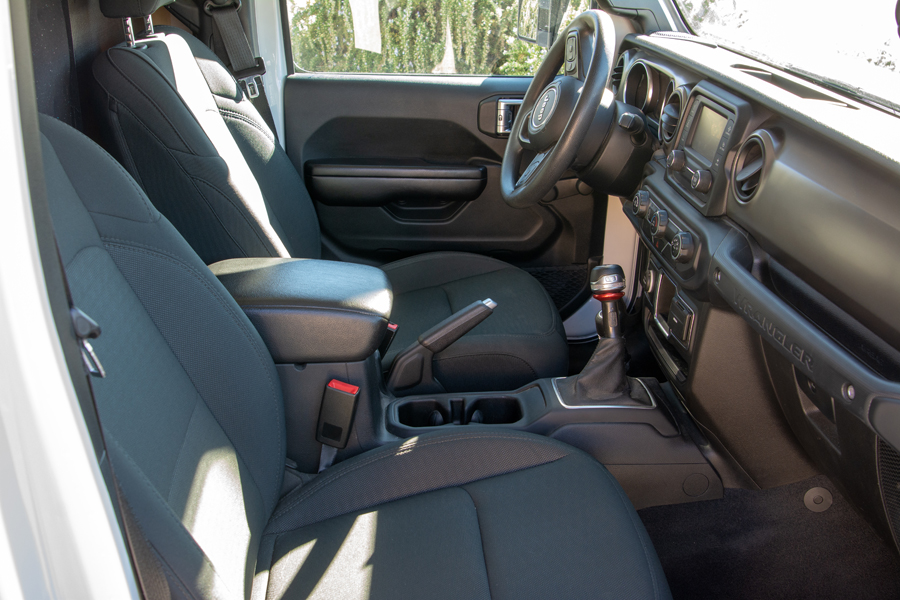
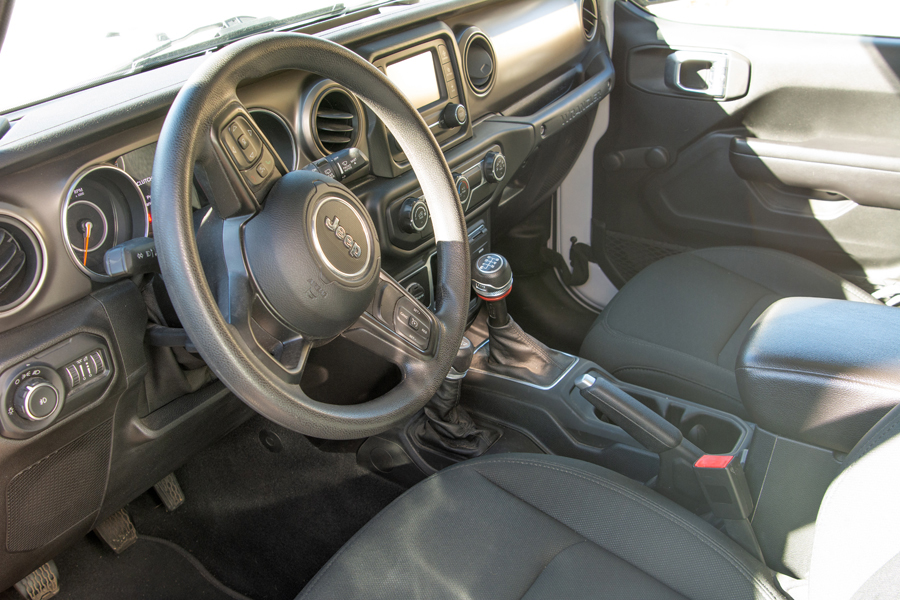
- Transmission: 6 speed manual transmission with H/L 4×4 transfer case
- Trim package: Sport (cruise control, AC, crank windows, 5” touchscreen, manual door locks)
- Integrated voice command and Bluetooth (we have never tried/used it)
- Reverse camera (can be turned on at any time via Tazer-JL-Mini while driving to be used for rear view)
- US vehicle with 50 state emissions
- Exterior dimensions (will fit in a standard 20 ft shipping container):
- 16′ 8″ (200″) long
- 6’ 2″ (74″) wide
- 7′ 2.5″ (86.5″) tall (with pop-top down)
- Fuel tank: 21.5-gallon
- Fuel milage: 17.4 mpg average over 10,050 miles of mixed driving (GPS verified)
- Easily cruises at highway speeds in 4th and 5th gear with stock axle gearing
- Axles:
- 3.45 overall top gear ratio (per VIN lookup)
- Rear axle: DANA M220 (“anti-spin” differential)
- Front axle: DANA M186 (“conventional” differential)
- Weight:
- MGVR: 5,300 lb
- Overall vehicle curb weight: 4,730 lb (as of last weighing)
- We have used it at or under MGVR with two people and gear
- New windshield January 2026
- New clutch January 2025
- No problems with original clutch; it was just replaced under a recall
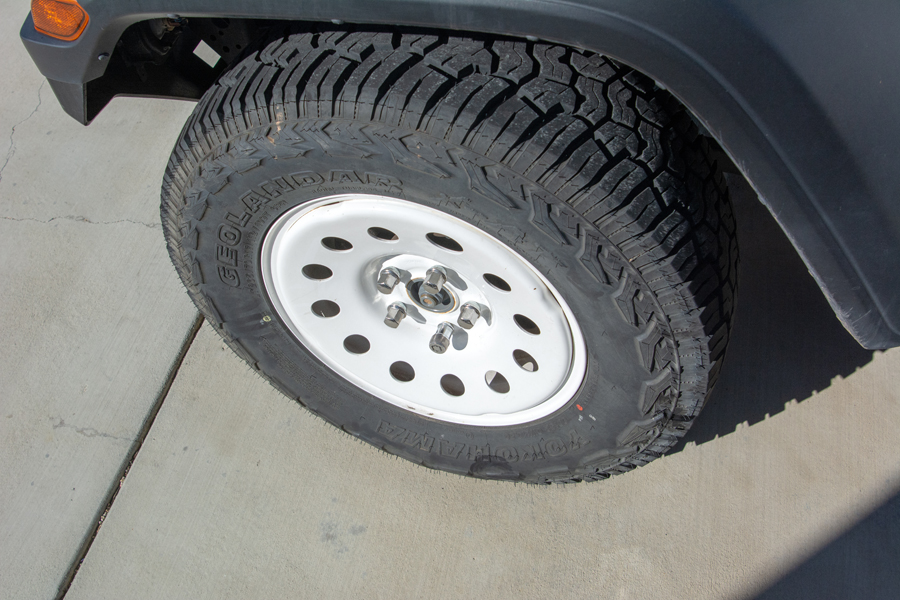
- Tires: 265/70R17 112/109T Yokohama, GEOLANDAR X-AT, All-Terrain (new spring 2023)
- Tires have good tread with ~10,200 miles on them
- Spare tire on roof rack has been cycled through regular rotations
- New tire pressure sensors spring 2023 (Mopar/Schrader P/N 68402371aa)
- Wheels: Steel 17×7.5″ Mopar Winter Wheels (Mopar P/N 52124455AB)
- Wheel finish: Sandblasted and gloss white powdercoated
- Vehicle paint color: Bright white w/ clearcoat
- Habitat finish: White gel coat, white powdercoat, and acrylic enamel
- Rear bumper: Steel, American Expedition Vehicle (AEV) bumper with mud flap kit
- Front bumper: Aluminum, Rock Hard 4×4 Full Width w/ Lowered Winch Plate (RH-90245)
- Snorkel:
- American Expedition Vehicle (AEV) snorkel kit
- Round Sy-clone pre-filter (and AEV scoop inlet)
- Roof rack: Modified aluminum Rhino Rack Paineer rack (mounts directly to roll bar for solid loadpath)
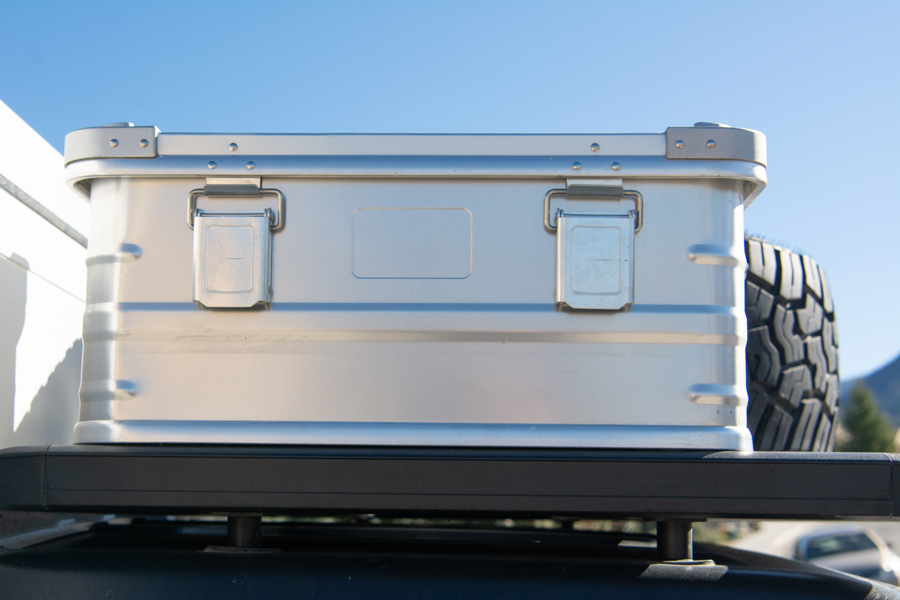
- Roof rack box: 30L aluminum roof rack box with weather seals
- Spare tire on roof rack mounted with Rhino Rack spare tire hold-down assembly (P/N RSWH)
- Detachable side “towing” style mirror extensions
- Chassis electrical:
- Programmable Tazer-JL-Mini (sets full-time rear camera and setting state of Start/Stop)
- New start battery spring 2023
- Disconnected auxiliary battery for increased reliability (can be easily reconnected)
- LED marker lights
Fluid Tanks
- Stock 21.5-gallon JLU fuel tank
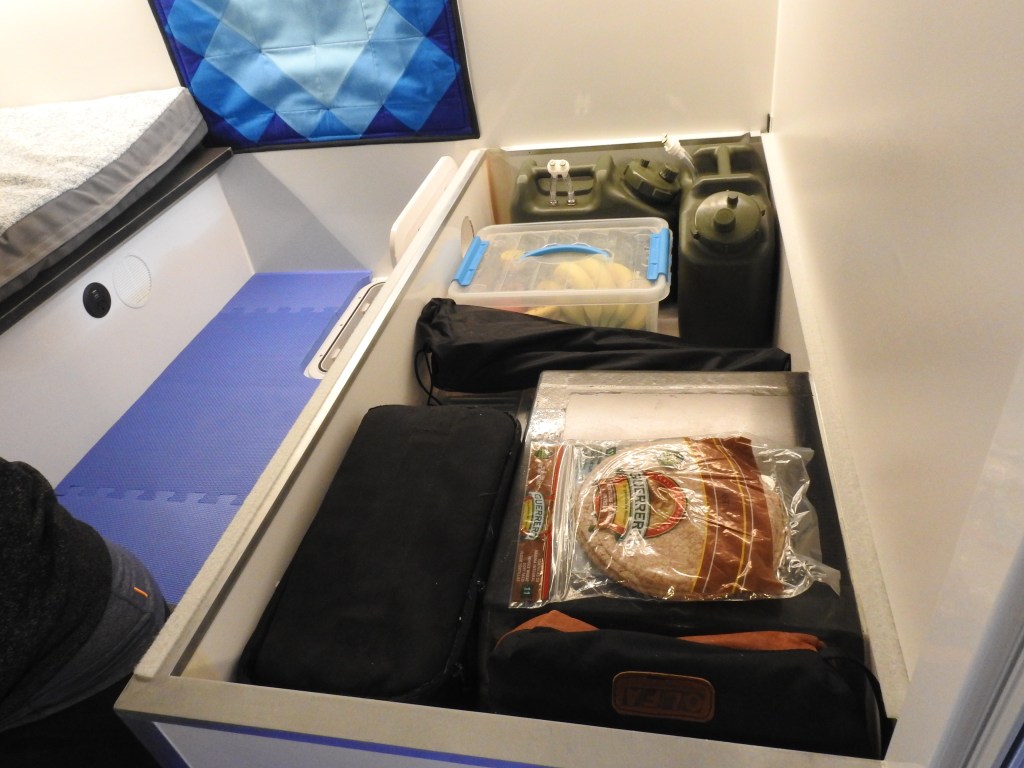
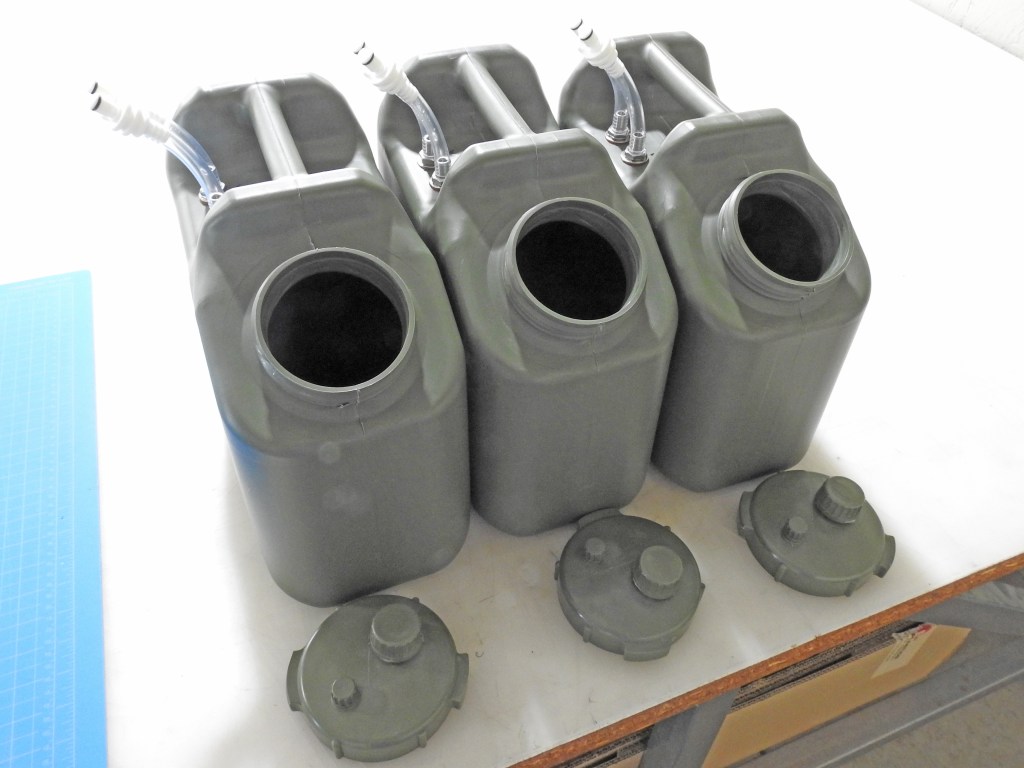
- 7.5-gallon fresh water capacity (in 3 military Jerry cans with medical grade quick disconnects)
- Trelino Evo L Composting Toilet
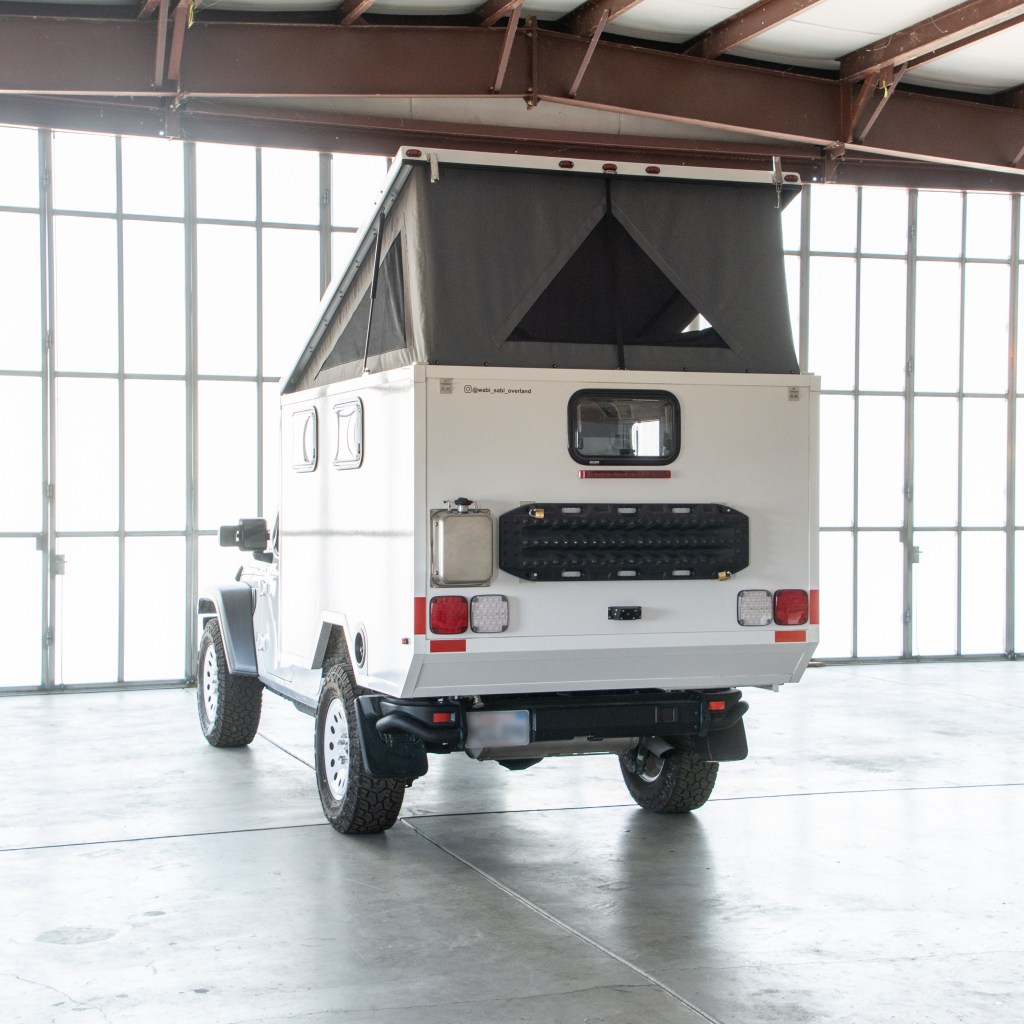
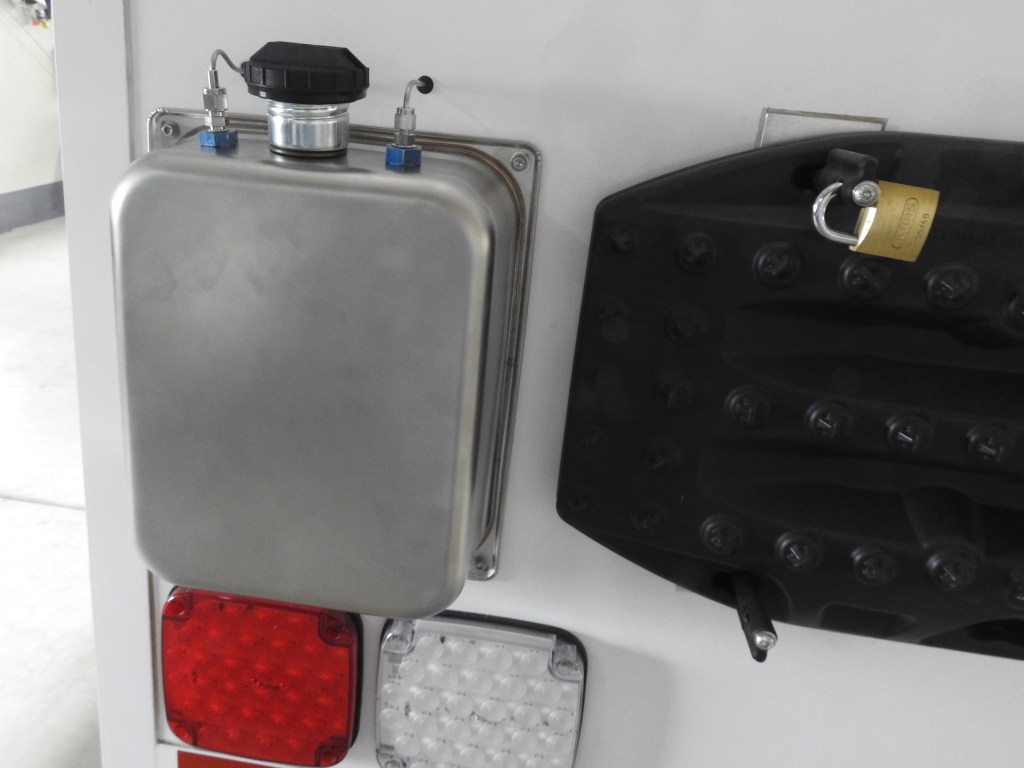
- 7-Litre Stainless Steel heater fuel tank mounted on back of camper
Storage
- Over roll bar storage shelf (70” long, 9” deep, 6.3” tall, with ~3” additional height clearance)
- Kitchen utensils zipper tote (13” wide, 9” deep, 6.3” tall)
- Right bench seat (50” long, 21” wide, 11.75” less wheel well and two jerry cans)
Left bench seat (50” long, 23” wide, 11.75” less wheel well, batteries, and one jerry can) - Under bed in “night mode” (50” long, 26” wide, 11.75”)
- Under floor (volume of original rear passenger foot areas; great for tools, jacks…)
- 30L aluminum roof rack box with weather seals
- Three multi-pouch canvas zipper bags on back wall (13 pouches that are 14.5” wide)
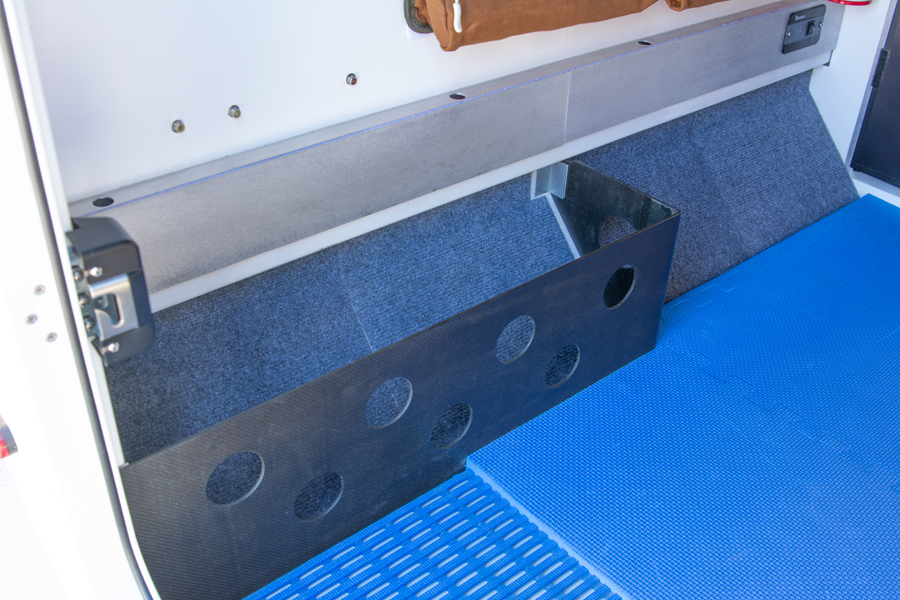
- Carbon fiber shoe storage cubby on left side of entry door (fits 4-5 pairs of shoes + catch all storage)
- Coat/backpack hooks on back wall on left side of entry door
Habitat Specs
- Habitat exterior Dimensions: 93.25″ long, 73.875″ wide, and 57.25″ tall (with pop-top down)
- Habitat interior height: 54.5″ tall with pop-top down, and ~7’ 4” tall (in back) with pop-top up
- Habitat interior width: 72″ wide
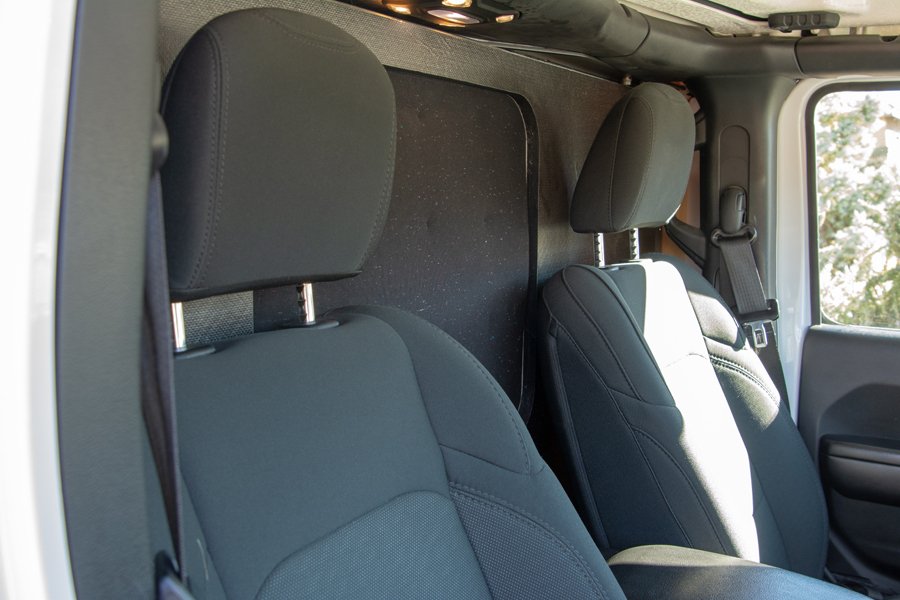
- 24” x 19.5” passthrough into cab (with insulated Velcro attached cover)
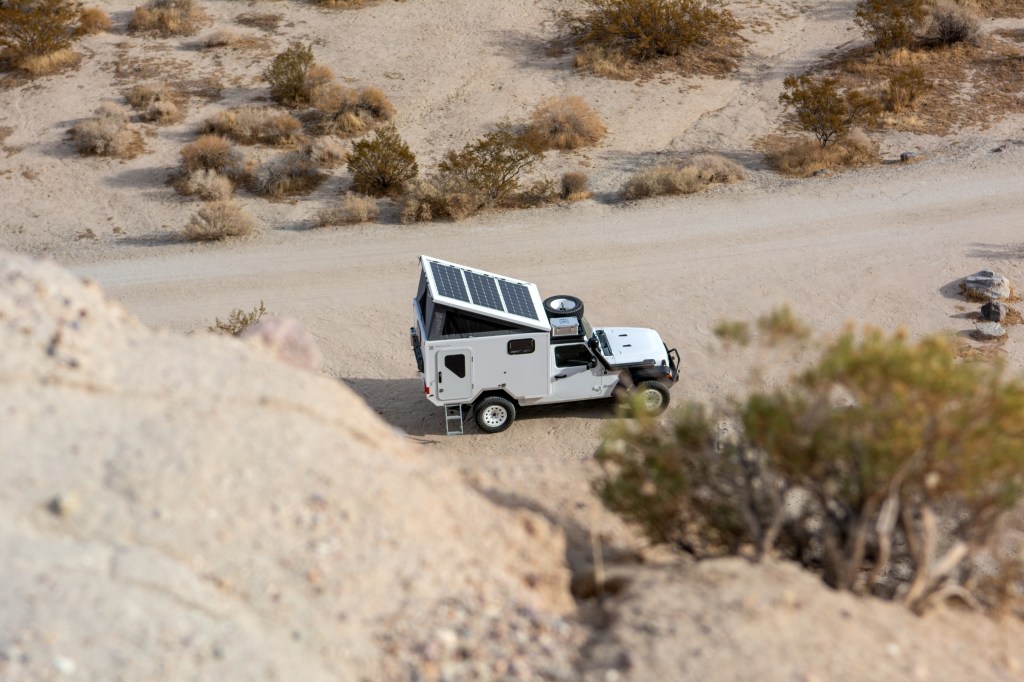
- Pop-top:
- Front hinge wedge style pop-top
- Cloth: Top Notch 9 Charcoal Fabric
- Screens: No-See-Um Performance Mosquito Netting, Black
- Zippers: Lenzip #10 Black Separating Molded Tooth Zipper
- Lift: Two gas struts, 33 inch long, 50lb/68lb, McMaster Carr 4138T621
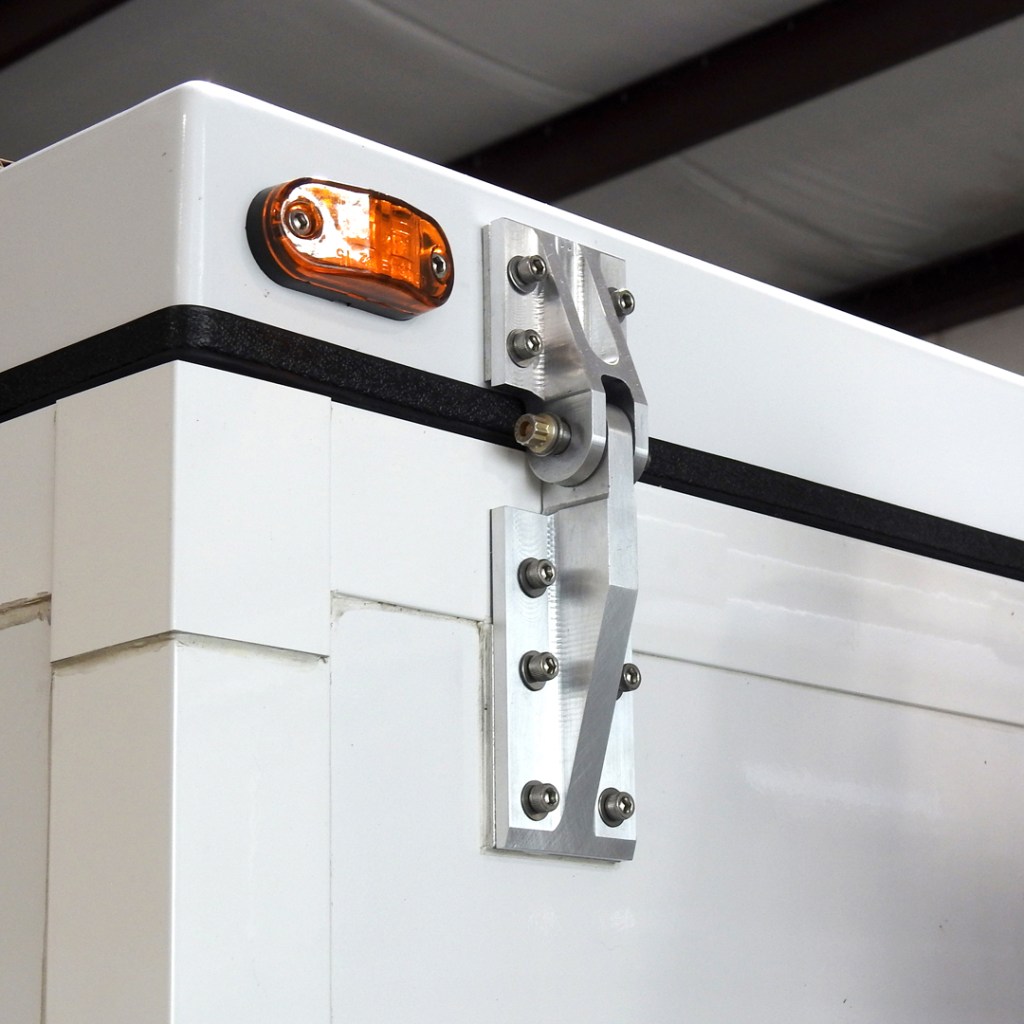
- Latches: Stainless steel latches from Ursa Minor Campers
- Side walls: 0.8” carbon fiber Urethane FR-3704.5 foam sandwich panel (R3.5)
- The ceiling/roof and passthrough wall: 0.8” carbon fiber Divinycell H45 foam sandwich panel (R4.5)
- Floor and aft wall: 25mm thick fiberglass composite polypropylene honeycomb sandwich panel
- Habitat internal frame: TIG welded steel frame with full coverage gloss white powdercoat
- Structural assembly adhesive:
- Kommerling Korapop 225 (using Sika Aktivator-205 and Sika Aktivator-100)
- ProSet LAM-125/224, ProSet LAM-135/224, and West 105/205
- Windows:
- Arctic Tern Overland Euro-style double glazed windows
- 3 windows above bed, 300x500mm (with integrated blinds and screens)
- 1 window in back wall, 300x500mm (with integrated blind and screen)
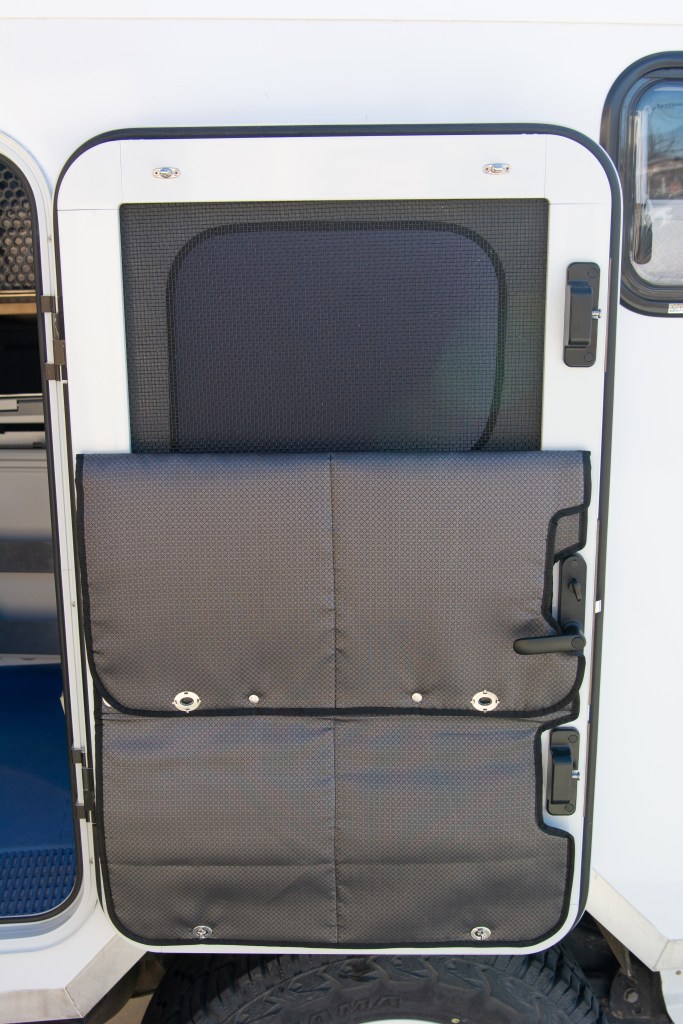
- Door: Arctic Tern Overland Wildlands door with screen + insulation kit
- Marine grade latching cargo hatch in forward floor of habitat for underfloor storage
- Recovery: Two MAXTRAX MKII recovery tracks (black) mounted to back of habitat (with locks)
- Slide out steel entry ladder under camper entry door (modified Mytee Ladder-2R)
- LED marker lights and reflectors in all DOT required locations on exterior of habitat
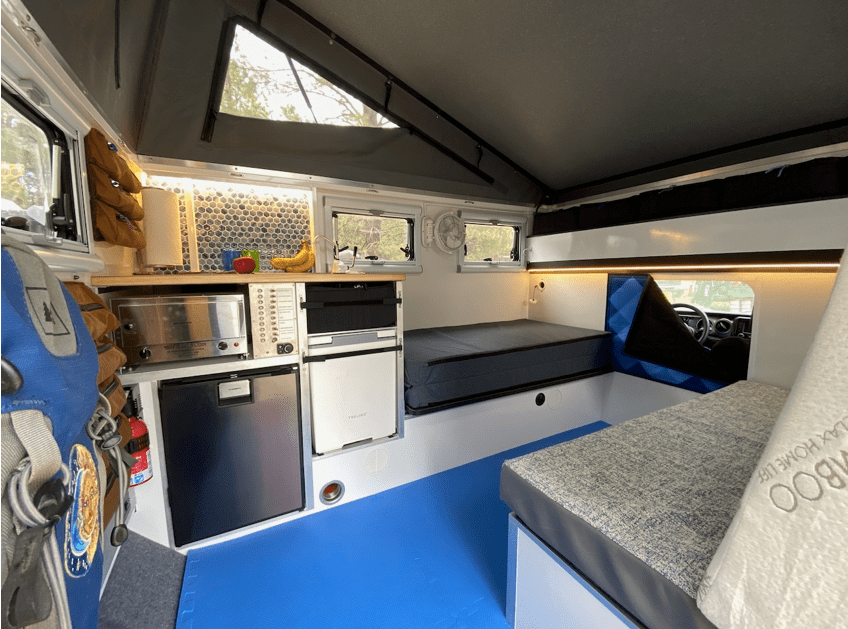
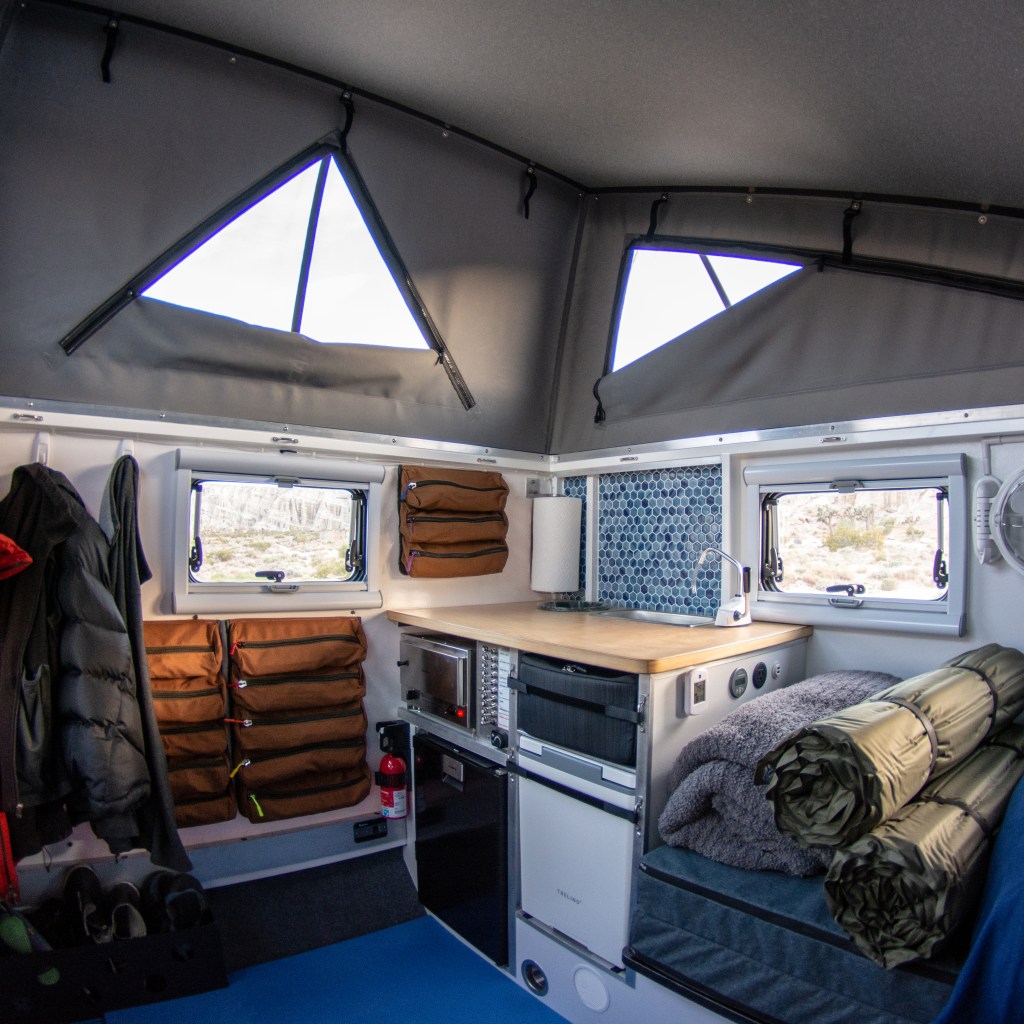
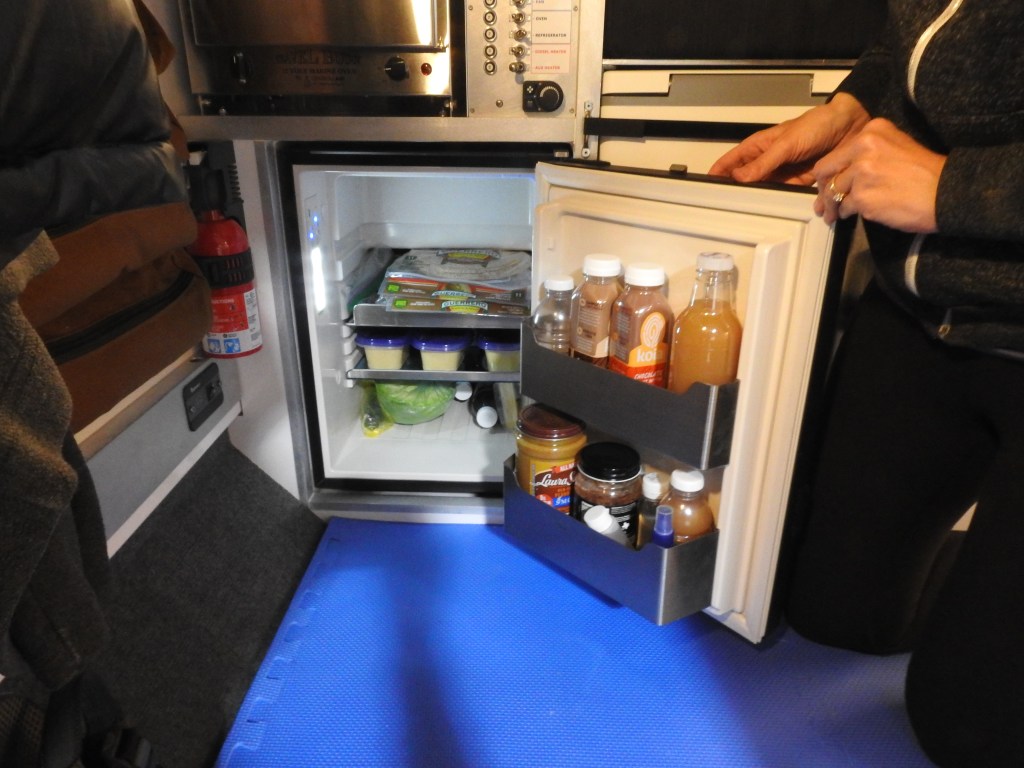
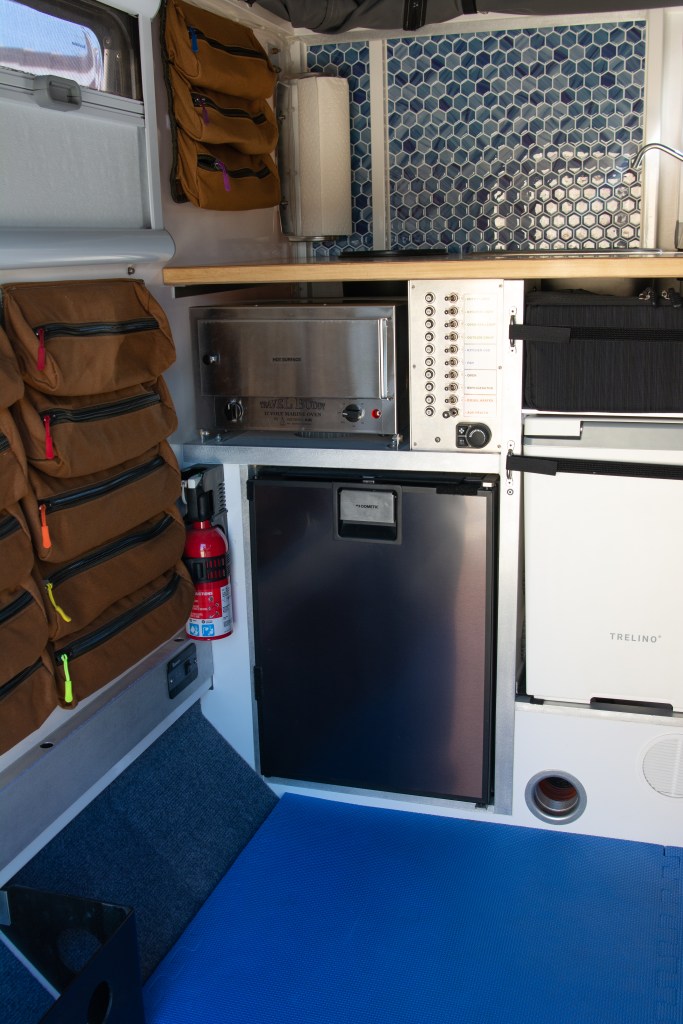
Habitat Interior
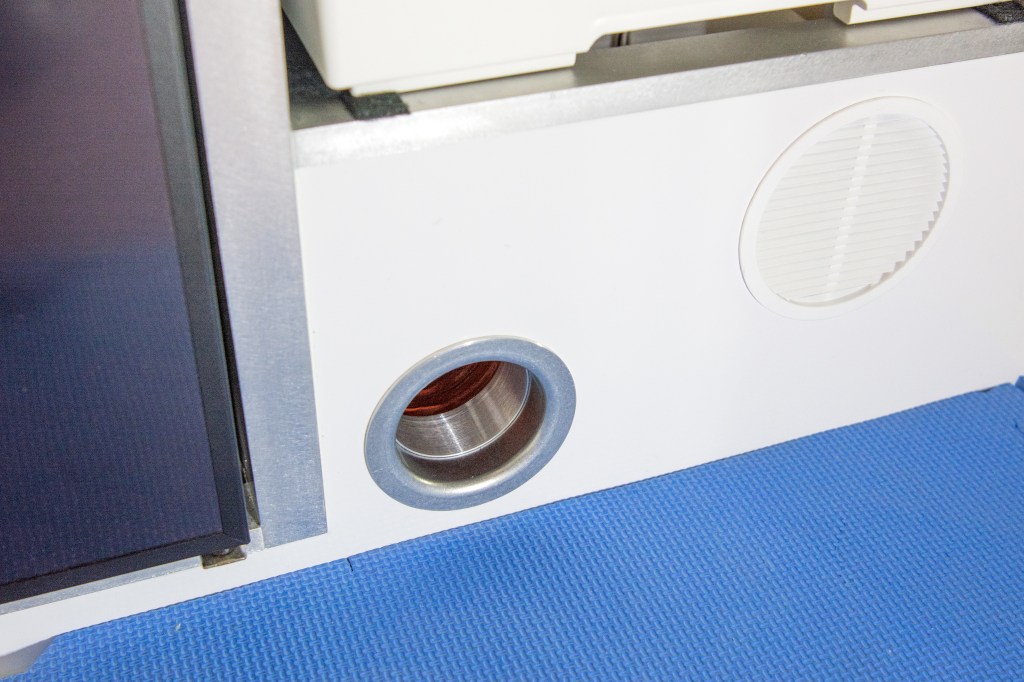
- Entry flooring: grid rubber mat floor “mudroom” with drain just inside entry door
- Flooring: Interlocking blue foam gym mat
- Accessories: Fire extinguisher, mirror, and paper towel rack
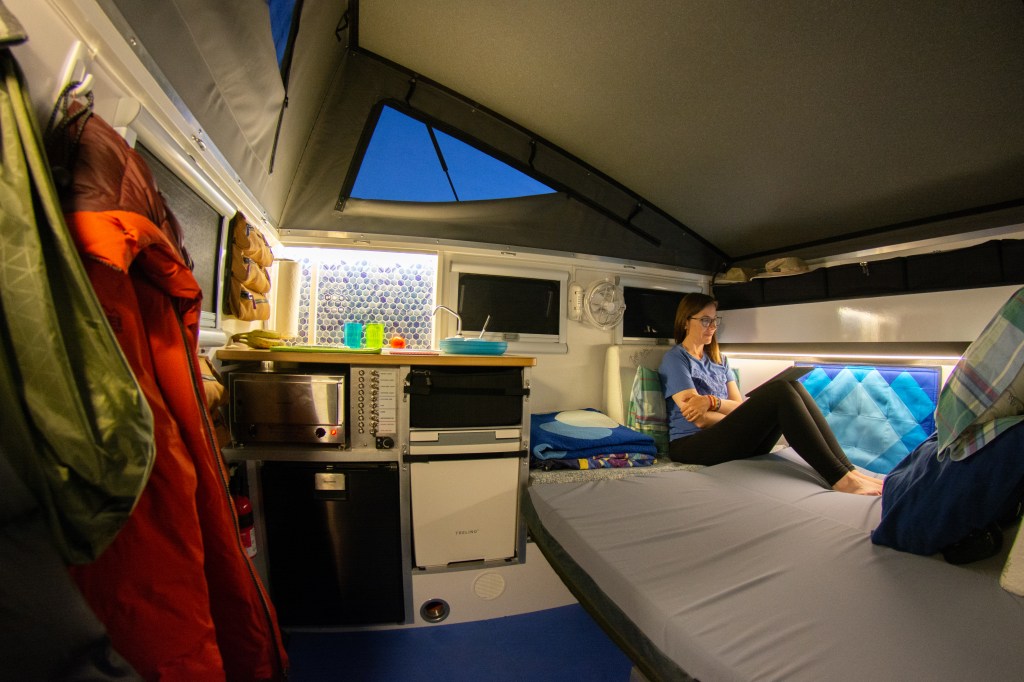
- Oven: Travel Buddy 12V oven (with shelf and non-stick pan)
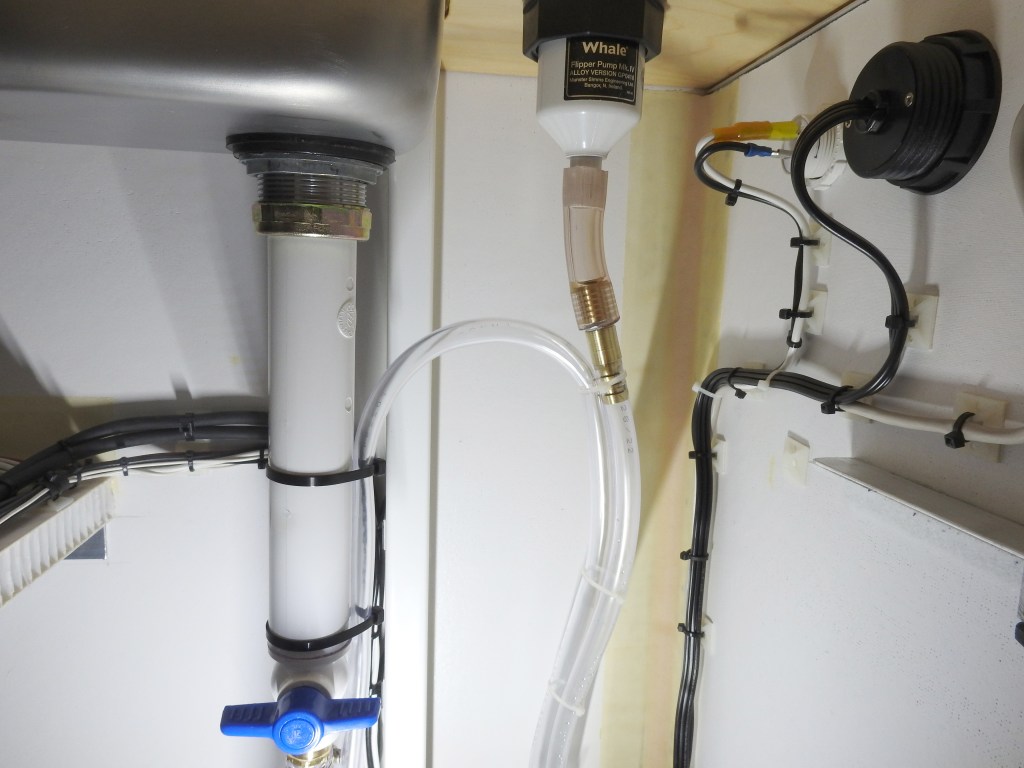
- Sink: Stainless steel sink (12.75″ long, 7″ wide, and 4″ deep) with standard 2.5” “bar style” drain
- Gray water: Sink drains to ground (can retain about 0.5 liters of water by closing under sink ball valve)
- Faucet: Pump faucet (Whale GP0418 Flipper Pump Mk 4 Hand-Operated Galley Water Pump)
- Composite kitchen countertop (Mil spec birch plywood and aircraft grade foam core)
- Refrigerator: DOMETIC CoolMatic CRX 0050T PRO, 46L with 4.4L of Optional Freezer Space
- Bed:
- Modified HEST 3.9” Dually memory foam mattress
- Mattress folds into two bench seats for “day mode” (easily sits 4 people or a cozy 6 people)
- Mattress size 50” x 72” (I am 6’2” tall, and it fits my wife and I well)
- Bed platform is carbon fiber and aircraft grade foam sandwich panel
- Plenty of headroom to sit in bed with pop-top down (very cozy with top down in bad weather)
- Fan: Caframo Sirocco II fan over bed
- Two 115V power outlets
- Three USB outlets (two USB sockets each)
Habitat Interior Lighting
- LED lighting throughout habitat interior
- LED strip light over kitchen counter
- LED strip interior entry light
- LED strip over bed (top of passthrough wall)
- Exterior LED light underneath rear of habitat
Habitat Electrical System
- Solar:
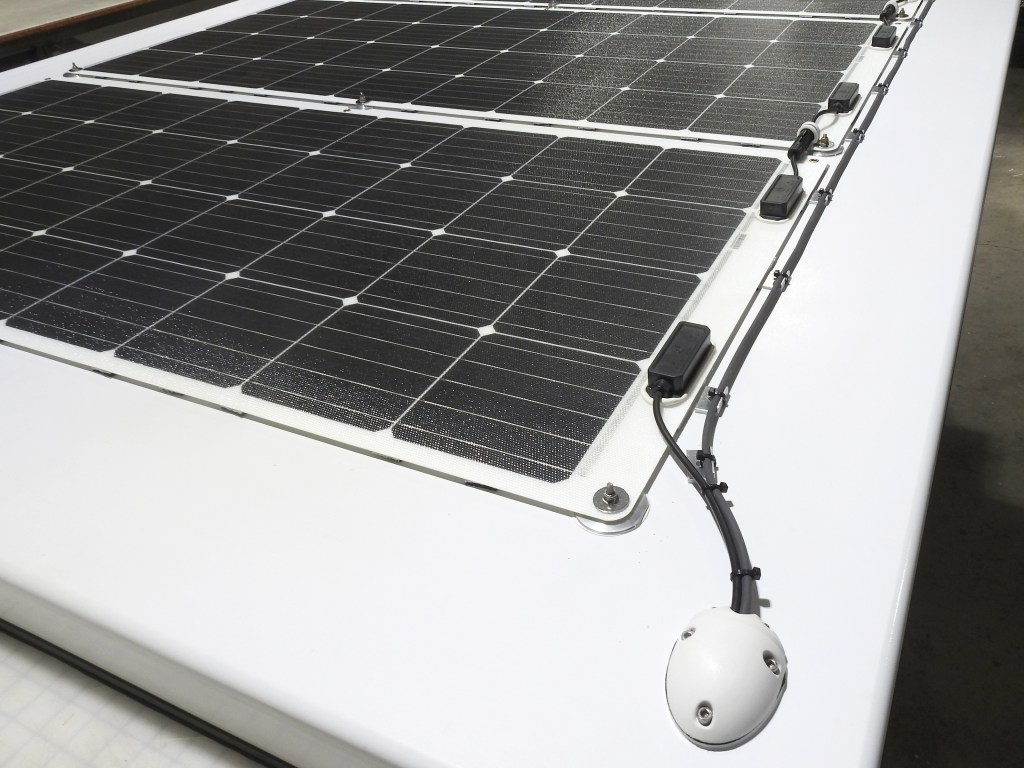
- 525 Watts solar panels on roof of habitat
- Three Renogy 175W, 12V, flexible monocrystalline panel (wired in series)
- Solar panels are fuse protected
- O-ring sealed MC4 power connectors throughout
- Blue Sea SE7 Side entry waterproof cable gland on roof
- Victron solar charge controller (MPPT 75/15)
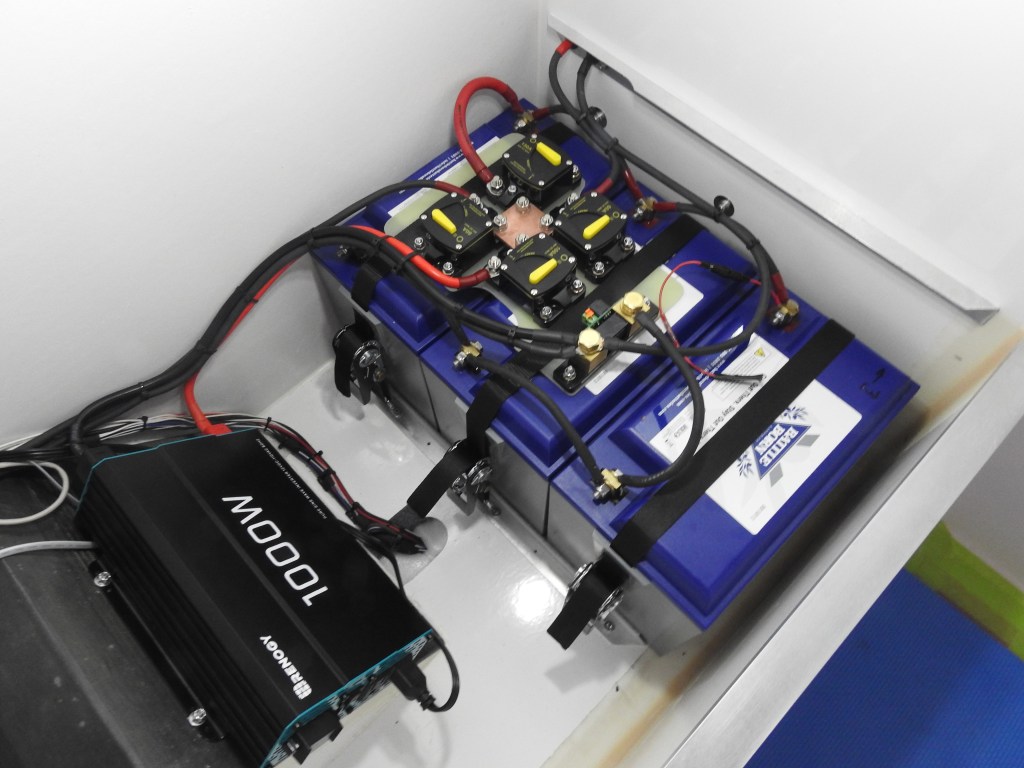
- Breaker/cutoff switches: Solar, invertor, and main power
- Batteries: Three 100 Ahr Battleborn Lithium Iron Phosphate batteries (300 amp-hours total)
- Battery monitor: Victron battery monitoring system (Bluetooth capable BMV-207 Monitor)
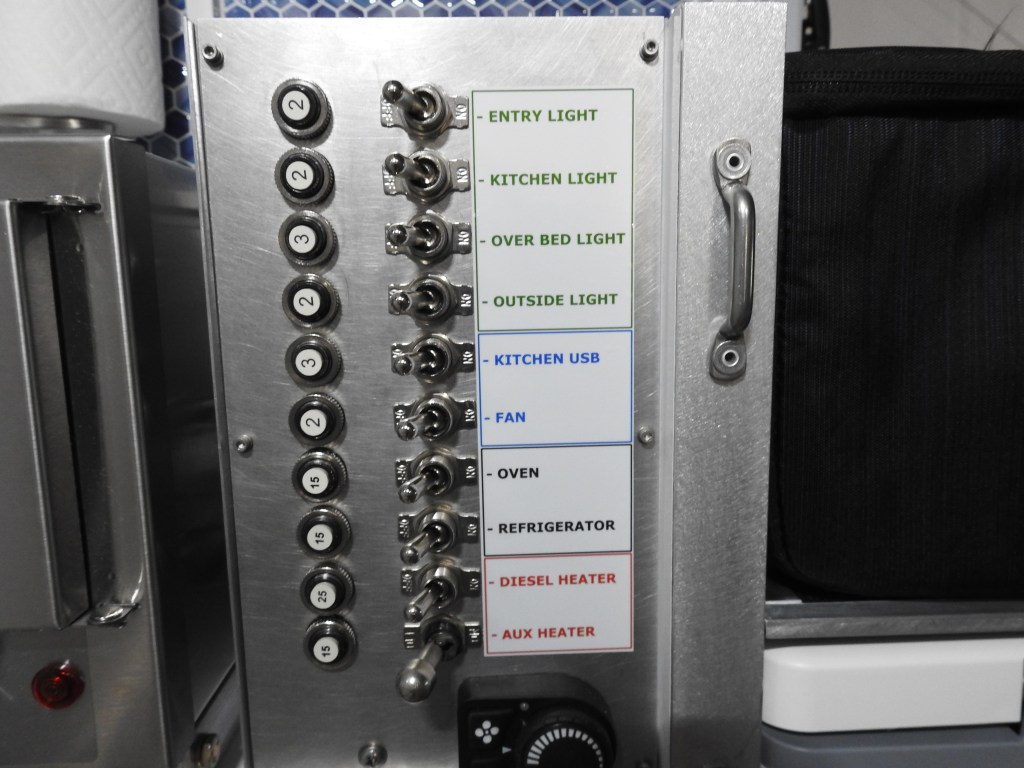
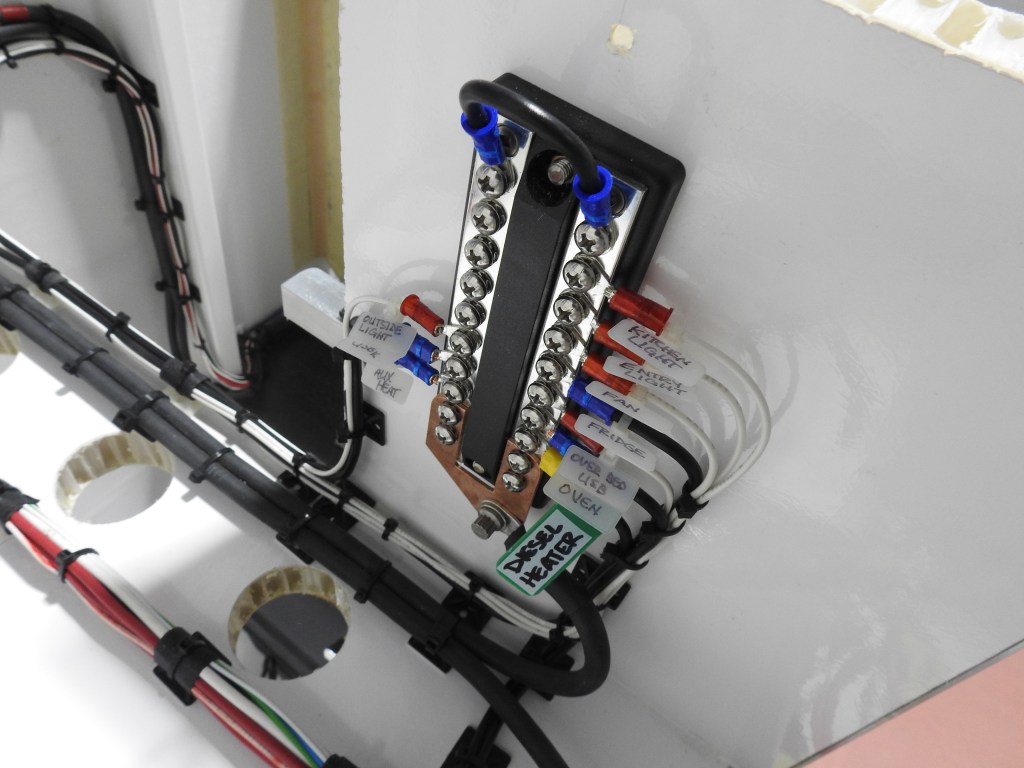
- 10 circuit distribution panel
- All aircraft grade circuit switches and breakers
- Inverter: Renogy 1,000W pure sine wave inverter (with remote control pad)
Habitat Systems
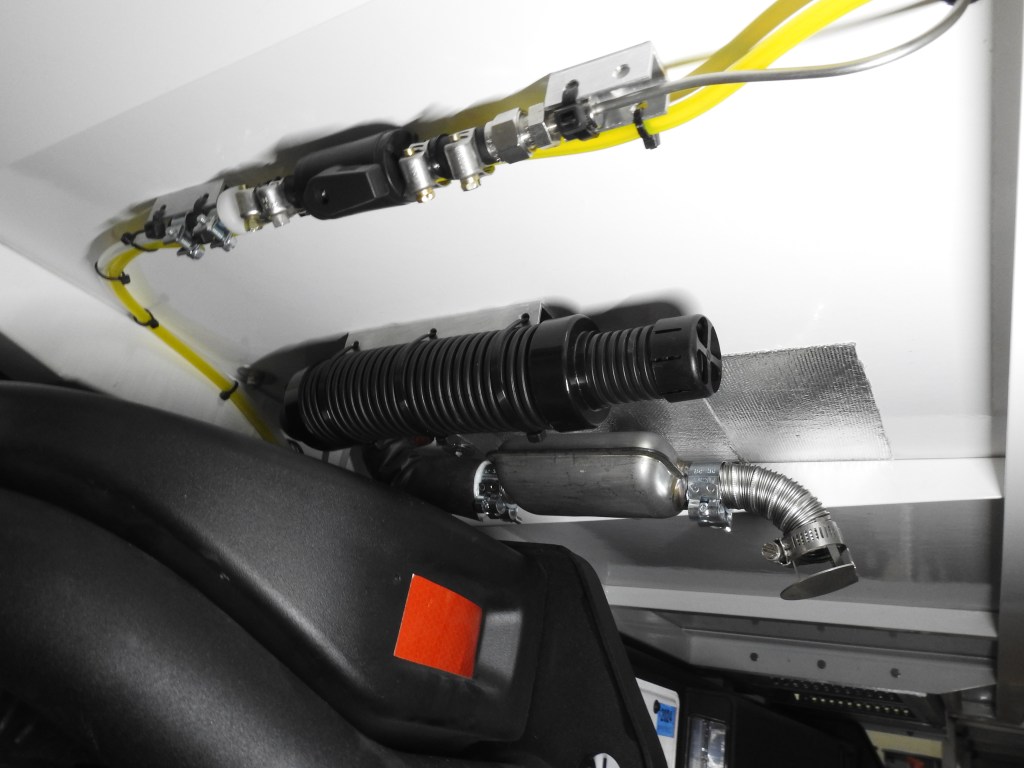
- Heater: Planar 2D-12 High Altitude diesel heater with mufflers and controller (we run it on kerosene)
- Heater tank: 7-Litre Stainless Steel tank mounted on back of camper
- Heater fuel filter and cutoff valve on underside of habitat
- Secondary heater: 145 W 12v electric heater in passthrough wall (helps a lot with condensation)
 Wabi-sabi Overland